SpaceX Makes History: Starship Caught by Mechazilla Tower for First Time
SpaceX successfully catches its Starship spacecraft at its Texas launch tower for the first time after a 22.5-hour mission and 14 orbits around Earth.

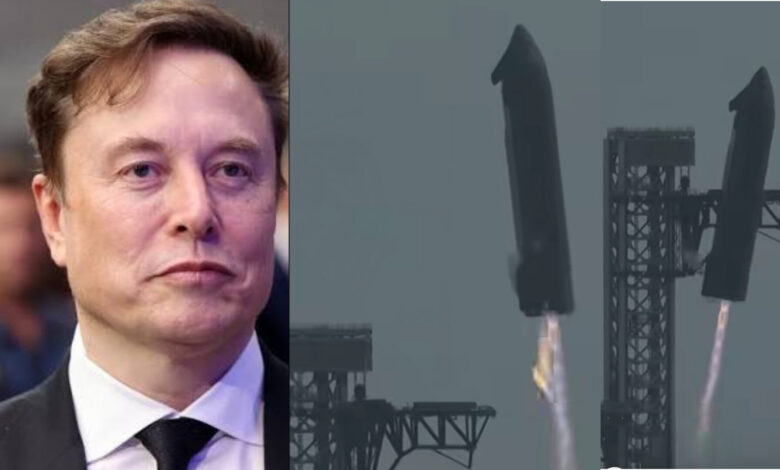
SOUTH TEXAS, USA –Space exploration has witnessed another historic milestone after SpaceX successfully caught its Starship spacecraft using giant mechanical arms attached to its launch tower in South Texas on Saturday, November 14, 2026.
The remarkable achievement marks the first time the Starship upper stage, known as the Ship, has been successfully recovered directly at its launch site after returning from space.
The historic operation took place at SpaceX’s Starbase facility, where the spacecraft descended from orbit and was carefully guided into the mechanical arms of a massive launch tower nicknamed Mechazilla.
According to reports, Starship had spent approximately 22.5 hours in space, completing 14 orbits around Earth before returning for the unprecedented recovery operation.
Video here:
https://www.facebook.com/share/r/1KGaABFPVQ/
After completing its orbital mission, Starship re-entered Earth’s atmosphere before manoeuvring towards its launch facility in Texas.
As it approached the tower, the spacecraft reignited its engines, positioned itself vertically and descended between two enormous mechanical arms, popularly known as the ‘chopsticks’, which successfully caught it.
The achievement represents a significant step towards SpaceX’s ambition of developing a fully reusable rocket system.
Although the spacecraft’s recovery was successful, SpaceX did not achieve its planned recovery of both rocket stages.
The Super Heavy booster, which initially propelled Starship into space, failed to return for its planned tower catch and instead diverted towards the Gulf of Mexico.
Despite this setback, the successful recovery of the Starship spacecraft itself represents a major engineering achievement.
SpaceX’s reusable rocket technology is designed to reduce the cost and complexity of space transportation by allowing major rocket components to be recovered and reused rather than discarded after every mission.
The technology is also central to the company’s ambitions for future lunar missions and eventually human exploration of Mars.
For SpaceX, Saturday’s achievement is more than an impressive spectacle; it is an important step towards making space travel more reusable and potentially more affordable.
One thing is certain: SpaceX has given the world another glimpse into the future of space exploration.
The SnrKusi Media – Bringing the world closer to you.